Erick: Hello, friends. My name is Erick Cloward and welcome to the Stoic Coffee Break. The Stoic Coffee Break is a weekly podcast where I take aspects of stoicism
and do my best to break them down to their most important points. I dig into ancient and modern wisdom, psychology, neuroscience, whatever I can get my hands on to help you think better.
Because I believe that if you can think better, you can live better.
And normally my podcast episodes are about 15, 20 minutes, and occasionally I like to throw in interviews with people that I think are interesting and would contribute to your understanding of stoicism or even just how to live a better life.
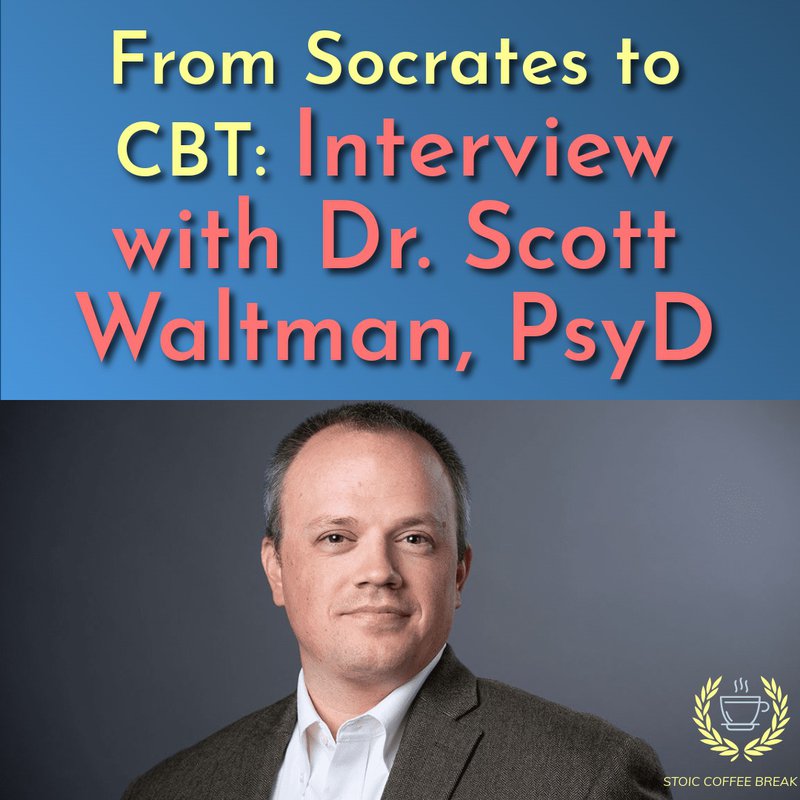
And this week's interview is with Scott Waltman, he, sorry, Scott Waltman. There's no D on the end of it. Uh, he has his doctorate, it looks like in psychology. I'm not sure what ABPP is. Uh, Scott can explain that afterwards. He's also a clinician and international trainer and a practice based researcher.
Having a hard time reading today.
Uh, his interests include evidence-based psychotherapy, practice, training, and implementation systems that provide care to underserved populations. He's president of elect of both the Academy of Cognitive Behavioral Therapies and the International Association of Cognitive Behavioral Therapies, his board certified in behavioral and cognitive psychology from the American Board of Professional Psychology.
Dr. Waltman worked as a CBT trainer for one of Dr. Aaron Beck's, CBT implementation teams in the Philadelphia public mental health system. He was practicing stoic and the first author of the Stoicism workbook. The How the Wisdom of Socrates can help you build resilience and overcome anything life throws at you.
That was a mouthful. So welcome Scott. I appreciate you coming on my podcast. I know that you, this book has been recently released
And uh, It's nice to have another CBT therapist on here. I've had Donald Robertson on here twice and, uh, always fascinating and fun conversations with him. Um, and I appreciate people who practice CBT because as we know, it was based on, uh, stoicism and that was something that
I found to be very powerful. And CBT as we know, is kind of one of the main, uh, drivers of modern psychology and therapy as we have it. So, um, anything else you'd like to add to the intro?
Scott Waltman: That was great. I should have you introduce me all the time. It's so much easier than doing it for myself. Yeah, I'm, I'm excited to be here. Right. I would say, um, I, you, me, you mentioned Donald Robertson. I'm a huge, huge fan of Donald, I think. Um, can you say like, who do you wanna be when you grow up? I'd say Donald, although I don't know that Donald's much older than me. Um, but no, I'm excited to be here. I mean, I do wanted to say that like, you know, I, I enjoy your podcast. I'm so excited to be here. You know, I'm a, I'm a therapist and I do individual therapy and group therapy. I run a a, a Gusto system focused group for people who are survivors of, of trauma and abuse. And we often listen to, like, excerpts of, of your podcast together. So it's kind of cool to be here now. Um, so I'm just happy to be here.
Erick: Oh, thank you. I appreciate that you're, that my material is good enough for you to use in that type of setting. I, that's, that's humbling.
So thank you so much for, uh, for being on here. Um, so, oh, there's so much to that we could talk about and trying to think of the best place to get started. Um, I think one thing that was interesting for me, uh, as I was looking through kind of the table of contents of your book, and I know this is kind of jumping ahead, but I really, This idea kind of, kind of hit me with me. Uh, chapter six is tolerating discomfort and Decreasing Suffering, When I read that, it was an interesting idea for me in that one of the things that I often talk about on here is the idea that the better you can tolerate discomfort, the more you decrease your suffering. you know, is that kind of the, the gist of that chapter? Or is it, you know, one and the other? Or, and maybe you can kind of go into that and gimme your thoughts on that.
Scott Waltman: Yeah, I think, I think definitely, maybe a little bit of both, but certainly there's a large emphasis on acceptance, um, a sense. Like we often suffer when we're trying to. Live a life that's out of harmony with nature. When we're, when we're in a place of non-acceptance, that's usually where we're gonna be in a lot of pain. Um, so as an example, right? So I'm somebody who lives with rheumatoid arthritis. I've lived with it for about a decade. Um, and I remember I had a sister-in-law who was diagnosed with it, and she was, you know, in a lot of pain as as it goes. And I remember she was starting medication and she was like, okay, so when am I gonna not be in pain anymore? And I was like, okay, here's the fun fact. Like you will be in pain for the rest of your life. Uh, but the thing is like, it doesn't have to be bad. Like, like I have pain every day. That's just the nature of life. That's all right. It's just information. My body's just doing its best. Um, my bad pain days are the days where I'm mad at having the pain where I'm like telling myself like, this is terrible. I can't stand this. This is the worst. And that's, that's for like mental reasons and like physical reasons, right?
Like mental reasons. I'm what? Uh, and CBT, we'd call it awfulizing, where you're kind of agonizing on it. It's like if you have a canker sore and you're sticking your tongue in the canker sore and you're just making it worse. But when I'm having these moments where I'm just saying like, oh, this is the worst.
Why did this have to happen to me? Uh, this is unfair. That's gonna be a miserable day. Absolutely. But also, like physically, when you're in that place of non-acceptance, right? You're driving up your cortisol levels, which is gonna increase inflammation. You have this like rigidity in tension, which is gonna increase your, your pain. So there's this thing where like, the best way to not, um, or to decrease your pain is to be okay with being in pain the, the, you let go of that pain catastrophizing, you can just live with it, right? Like, I live in Texas and it's so hot all the time. And it's not bad. It's just the way it's right.
But if I was to walk outside when it's a hundred degrees and say, oh, it's a hundred degrees. This is terrible. Why are they doing this? What's going on? I'm just making myself miserable. If I walk out and it's warm and I go, yeah, it's hot today. That's kind of how it is. I can just kind of make peace with it in a sense. So there is like an acceptance piece. Um, and I think, you know, it's interesting how like, I mean, I'm a big fan of cross-Pollinization, right? And I as somebody who's both a CBT therapist and a stoic, right? I think my stoicism supplements my, uh, my CBT and I think my CBT supplements my stoicism, uh, in CBT.
If you were learning like how to treat anxiety and how to treat anxiety really well, at some point we would oversimplify and boil down this like ratio or quotient. If you think back to your pre-algebra days, you know, in a fraction you have the numerator on top and the denominator on the bottom. And the bigger the numerator, the larger the number, the bigger the denominator, the smaller the number. Um, with anxiety, the numerator is like our anticipation or our worry that something's gonna happen. This often catastrophize or we assume that the worst case is gonna happen. We assume it'll be terrible, we assume we won't be able to handle it. And with anxiety, the denominator is like our personal resources, our ability to recognize that.
Like we can tolerate it, we can handle it. Um, and so sometimes we'll focus on decatastrophizing by looking at, well, this thing that you're worried about happening is this really realistic, right? Like, if I was worried about being, um. Something really unrealistic, which if this wasn't, I mean, I feel like in, in past years, I might say really unrealistic things would to be different.
Were in increasingly unusual times. Um, but if I was worried about being like abducted by Bigfoot, you might say, well, Scott, like one is like Bigfoot in Texas. Two, is he real three, is he abducting people four? Like are you the specific kind of person who wants to abduct? Like, this seems pretty unlikely. And I'd say, okay, there's still a chance, but like that seems unlikely and that might bring down my anxiety.
But if I'm really worried about something that like could happen, right? Let's say I'm worried about like, um, getting cancer when I'm older, right? Which happens to people certainly, right? Let's say I'm worried about like any number of things that can, that can happen with life. Um, I can agonize over it, but I can't really control it. There's maybe things I can do to influence it, maybe. Maybe, um, but I can really focus on the denominator. where we have a lot of control and I think that's where the stoics really focus, stoics focus on, you know, don't hope for an easy life.
Hope for the ability to tolerate whatever comes at you. And so the, so we, we really find peace, serenity, strength, freedom from recognizing that I'm somebody who, who can survive bad days. I'm somebody who can tolerate pain and discomfort. Like if you're, and fucking so much. But if you were gonna go like on a road trip, right?
You were saying I hope there's not any traffic. I hope there's not any road construction. Like that's a terrible setup because there's definitely gonna be traffic, there's definitely gonna be road construction. There's definitely gonna be some going too slow in the left lane that you pass several times.
And that's just how it is. Um. But if you were to say like, okay, like there's gonna be traffic, but like, I hope I can like, you know, focus on enjoying myself, I can make the most of it. Like I can, there's a lot of cool things you can do on a road trip, right? You can eat just like disgusting food that you normally don't eat, right?
You can listen to some music that you haven't listened to in a while, right? If you have somebody else there, you can reminisce on some fun times, but it might, there might be traffic, but, but it doesn't have to be bad anyways. Go on
Erick: No, I was gonna say that's, that, that reminds me of kind of two, two different things that for me were like big revelations. Um, when I started studying stoicism and it was one of the things that drew me, you know, obviously ate, meaning accept your fate. And it took me a long time to really kind of internalize that idea.
And I kind of have my own definition of it is gonna happen to you and the universe doesn't care whether you like it or not.
It's still gonna happen. So you can either face it with acceptance and hopefully you can get to the point where you love it or you can hate it and complain and whine and think of how unfair everything is.But it's not gonna change whether or not it happens.
So the only thing that you, you can control in that situation is how you want to approach it.
And so, understanding that it's just gonna happen no matter what you do. So focus on that thing that you can change, which is your outlook on it.
The other thing that is something you kind of brought up is that, you know, it's slightly related, is I often talk about the idea of failure is just missed expectations.
And it's the idea that so much of our misery comes because we have an expectation about something and we expect a particular outcome.
We expect it to be this certain way. Like, you know, like the case with your sister-in-law, as soon as she takes the medication, bam, it's gonna be gone.
And because she had this expectation when it wasn't something that could actually be, then she feels like, you know, it's almost doubly crushing.
Managing your expectations, you know, um, keeping them, I hate to say it, but yeah. Keeping lowered expectations, you know, like, I dunno if you remember that, that dating show called Lowered Expectations, it was, uh, on Mad tv.
Scott Waltman: Fantastic. Yeah, exactly.
Erick: That always, it always cracked me up. But, you know, I mean, I, and funny thing is I actually joke around about that when, you know, when I have people ask me, it's like, how do I get better at dating? It's so frustrating and I feel, you know, I, I go on these dates and they're awful and all these things. I'm like, when you go out on a date, have low expectations. They're like, but why would I lower my expectations? I'm like, no, no, not, don't lower your standards. Lower your expectations.
You know, when you go out on a first date, the only thing you wanna know is, do you want a second date? That's it. That's the only thing that you should want from that date is just to know if you want a second one. So, anything that's on top of that is gravy, you know, and by, by having low expectations about things, not being pessimistic per se. But just recognizing that the outcome out of your control, I find that, that that is a way to really bring some peace into your life because, when you don't, you know, if you at least hit those low expectations, then all right, you've done great. And anything else that's above that, fantastic. And so just managing your expectations is so much easier. It doesn't mean you lower your standards, but it means you lower what's what you think is gonna happen.
Because we oftentimes project in the future and we love to do things much more rosy scenarios, like, oh, well, you know, I'll get this gym membership and I, I know I'm gonna go four, five times a week. Well, maybe lower your expectations, put 'em at, you know, twice a week when you first start out, and then bump it up to three and then so on.
And I find that, yeah, I find that that expectancy oftentimes can be the thing that damages us the most because then anytime those expectations don't happen,
We feel like a failure or that life is unfair or all of these things.
Scott Waltman: Yeah. I agree and I think, I mean, I think your view of it more taste is more sophisticated than mine. I just think of that old song, was it Crosby steals National, young. Uh, if you can't be with the one you love, love the one you're with. Like, if you can't have the fate you want, like love the fate you have, like this is the one fate you get like whether like you want it or
Erick: Yeah.
Scott Waltman: you're at a restaurant, you order a hamburger, they bring you a fish burger, there's nothing else to eat. Like either you can eat this or you can go hungry. Like this is like, you might as well dig in because this is, this is the one life you get.
Erick: Yeah. On a more pessimistic tone and slightly vulgar tone, this girl I met when I was in high school, you know, we were, this was back before the internet, so we were writing letters back and forth. 'cause she lived like four hours away. And I asked her how things were going, you know, and
so she writes back and she goes, well, you know, this is, all these things going on, you know, I said at the end, you know, basically this attitude of life's a shit sandwich sometimes, and either you eat it or you starve.
It's just like, it just cracked me up. I was like, uh, okay. That's, you know, sometimes it is that way, but it's not always going to be that way.
Scott Waltman: I, that's fair. Right. And I think Albert Ellis right. Famous like, uh, stoicism. CBT guy would also say like, if, if sometimes in life you have to eat a shit sandwich and you have to take a bite and then he would add, if you, if you're eating a shit sandwich, it's best not to nibble. Like you might as well get it over with and like kind of jump right in.
Erick: I like that. Yeah.
Scott Waltman: Yeah.
Erick: Just you know, get it done as fast you can and move on. So now that's, that's a funny, uh, funny visual there. So, so in working with your clients, what do you find is the thing that, um,
I guess more recently, uh, what are the things that, that seem to be coming up more and more? Because I'm finding, uh, in my podcast episodes, different themes that seem to resonate with people that, um. That they were kind of surprising before that I wouldn't have thought of even, you know, three or four years ago that that seemed to be hitting. And I think, you know, again, it's as kind of a symptom of our times right now with, with how things feel very unsteady and, and in some ways a bit more chaotic.
Scott Waltman: Yeah, I think things do feel a bit more chaotic. I think part of that is also just like this echo chamber that we've created for ourselves and this like kind of bad news machine that I carry around with me and whenever anything happens anywhere I know about it and then I think about it and then I know what people think about what they think about it.
And it's an odd, system where I paid a lot of money for this thing that doesn't actually make me happy, but I'm constantly looking at, um, but no, I agree. I think there's a lot of uncertainty, right. And I think when. People have a really hard time tolerating uncertainty. on the psychology side, when we do research, what we find is like the trans diagnostic indicator of an anxiety disorder is intolerance of uncertainty. when people are, when people can't tolerate that, they don't, they don't know what's gonna happen, and they try to overcome that by like ruminating, obsessing, uh, going through hypotheticals or hypotheticals, like kind of trying to run through every scenario over and over and over and over again with this idea about then I can't be caught off guard. That's usually what, what really drives an, an anxiety disorder and maintains an anxiety disorder. you know, and stoicism is a great answer for that, which is like the stomach archer dichotomy of control focusing, which you have control over. Um, and I work with a lot of people who are just kind of worried about like, what's, what's gonna happen?
And there's a lot of uncertainty about comes next, which is challenging, right? Or even like working with like younger adults who are trying to figure out what career they wanna do. In some ways it feels to them like a different game, right? Like when I was younger, it was, what do you wanna do when you grow up?
And for them, they feel like the question is, what job is still gonna exist when I grow up? Which is a very different landscape to, to be living in. And it's hard to know how real that is not, but either way, that's, that's the fear they have. Um, and I like to, me, when I think about the stoic, uh, Archer, I think about this idea about process goals and outcome goals. And I think, you know, focusing like, what do you actually have a lot of control over and what don't you have control over is I think, really helpful for people. I mean, it's, it's a process of redirecting yourself to it, right? You have this gym analogy and someone might have the, this outcome goal of wanting to lose weight or wanting to have their biceps a certain size or wanting pack or something like that. Uh, but you can, you can't exactly control that, right? You can control like how often you go to the gym, sort of, you can control your diet. Pretty much we don't have like complete exact control over these things 'cause biology takes over sometimes. Um, I often try and stay away from that, like, uh, fitness, body perfection kind of stuff.
Because I can also work with folks who have some eating disorders and body image issues. And so I might talk about, um, so I live in Texas. I have a ton of pomegranate trees. Um, I just planted three more. I don't know why, but I have a ton of pomegranate trees and I wanna get as many pomegranates as I can. again, I don't know why, right?
Because I always get more than I can eat. Um, but I can't exactly control how many I get. Right? Like, I, like there's a really harsh winter there. There can be like a. A deadening of them, and I can like have to do a lot of like pruning back to try and regrow them. If it's a really hot summer, if it's really dry, I might get a lot of like almost empty fruit. If the winter isn't cold enough, then the, there's too many pests in the spring that are eating them up. If it's too dry, the, actually the lizards are eating 'em, but I don't mind the lizards eat them. I feel like they can have a few of them. Um, but so, but I can control, like am I watering as I need to? Am I like using some kind of PEs deterrent if I need to?
Am I pruning like I need to, am I fertilizing like I need to, and there's like a regular vigilance to it, which is part of, of the process and. I can control that, right? So my, my goal might be as many pomegranates as possible, but if I'm defining success on the number of pomegranates I get, that's a setup.
Because some years I'll get lucky, some years I won't. This year I got really lucky. My entire fridge was just full of pomegranates, so I was trying to give some to family members and things like that. And I, I had, I ended up buying like a, like a juicer because like I was just eating like so many pomegranates a day, and my poor mouth has all these canker sores.
But, um, but focusing on,
Erick: So you mentioned, uh, go ahead.
Scott Waltman: focusing on what,
Erick: Go ahead and finish that.
Scott Waltman: over, I think that's the, that's, that's the key to, happiness. And then you gotta figure out like, uh, what is a good life gonna be for me in the sense? But anyways, I don't mean to cut you off.
Erick: Um, yeah, so two things. One I wanted to ask about, you mentioned the Stoic archer twice. Can you inform our audience what, what that is exactly for those who are kind of new to this?
Scott Waltman: Wwhat it is. 'cause every now and then I think I know something and I'm not right. Which is a, actually a fantastic part of life is learning things, but the idea of the stoic archer is like if, like, if you were actually like an archer there, there's. Your job is, as an archer, is to be as accurate as possible.
That's like the whole gig is you want your arrow to go in the right place and not go in the wrong place. That's your job. Uh, but you can't exactly control where your arrow goes because there's a lot of things that can change, right? So humidity, wind, wind can change, uh, the, the composition of like the, the arrow that you're using, the how the, the condition of your bow, the condition of how your bow is stored.
All of these things can matter. Um, but the archer also doesn't let then say, well, if there's things I can't control, I can't control anything. And just kind of gives up and falls into like an nihilism of it, of nothing really matters. But, I mean the archer is studious and the archer hones their craft and they practice and they pay attention to what they can control, right?
They control, they practice their form. They, they get in good, good practice with it. And they do everything they can to understand what's happening and, and to exactly where it needs to go. And also the moment they, they loose their arrow like it's then out of their hands. And the, the wind could change after you let go, right?
Something could move afterwards, or it could be something unseen or unexpected. And that's not, fault. You can't control that. Although like it's technically your job to hit the target, you can't actually control that you're hitting the target. you can control dedication. You can't control practice, you can't control routine, and you gotta focus on doing a good job of controlling what you can and then recognizing that at some point it's outta your hands.
Erick: Exactly. And I like that metaphor. It's, it's a good way of kind of breaking down, you know, here are all the things in your control and here are all the things out as a practice. And I think that if you can get good at practicing that, of saying, okay. Here's what I can do and everything else is outside of my control.
Because I think that's one of the, one of the biggest challenges once you understand the dichotomy of control, is to really be able to apply it and go, okay, that's nice in theory,
How do I actually do that? And I, I like using that metaphor as a way to, as a practice, you know, what's in the archer control?
Well, this, this, this, and this. Okay.
When you're dealing with a situation in your life, the same thing. Figure out what is in your control and what you can, do and what you can't do. Um, you know, within our jobs, you know, you can control how well you do your work. You can control whether you know, to the best of your ability, whether it gets done on time.
But if you're not the person who's handing out the assignments for things, you don't have any control on what you're gonna be assigned to do. So you may not like the job, you may not like certain aspects of it, but what you can control is how you're gonna approach it. How well you do your job. And again,
Most likely, if you can get it done on time, although there may be external circumstances to that.
So you mentioned something earlier about those with kind of anxiety disorders and dealing with, you know, ambiguity and, uh, discomfort. And I've been pondering on, on this idea and, and I'm working on an episode about this idea of the fact that we really like answers because they're solid. They're, assured there's a security to having answers to things. But the power
that comes with questions is that they are ambiguous, they are insecure, they are, you know. But I, I, I kind of see them as. They're powerful tools and we love a good, we love a good answer because we feel safe and secure. And that's why a lot of people, once they find an ideology, then they become almost dogmatic about that because it offers a strong sense of security.
And I grew up Mormon, so that was, you know, I understand that very, very well because it was kind of spoonfed to me and then, but it never really felt like it fit, right? And they discouraged questioning because they want you to just follow the, here are the rules that are set out. This is the truth. And I always found that very challenging. And within your book, you, I know that there are several things where you talk about how to become a, you know, a Socratic questioner to understand how Socrates did things.
And the reason why so Socrates was so wise was be not because he had all the answers, is because he was, had all the good questions and he was willing to question everything and only held his opinion, saying Well, this is my opinion so far.And so with that kind of bringing the two points together, when you're dealing with people with anxiety, how do you get them to be willing to question and sit with that discomfort and that ambiguity? Because that's really powerful and it's what needed, and it's what's needed.
But that ambiguity and that and that discomfort are oftentimes the thing that caused that anxiety. How do you, how do you balance those two?
Scott Waltman: Yeah, we deal with that all the time. Absolutely. So there's some jargon that we have in therapy. I don't know why we have so much jargon, but we have some jargon. One of the pieces of jargon we have is something called a safety behavior, which the full name is a fault safety behavior. some things that we do with the intention of feeling better that actually make us feel worse. Um, and there's a lot of these we see like if you have social anxiety, a safety behavior might be having your smartphone with you. So if there's ever like a lull in the conversation, you can pull your phone out and just stare at it. Even if you're just like looking at your calculator, just stare at us.
You don't have to talk to anyone. Right. People with panic disorder might always have a water bottle with them 'cause they're afraid of being, uh, dehydrated. Um. People who have this, uh, kind of like fear of uncertainty, do a lot of reassurance seeking. And we see this kind of across the board reassurance seeking, like it might be like in a full true OCD kind of way. OCD is really like a doubting disease where you, you're not trusting your own mind, you're not trusting your ability to know things. And so you're constantly checking what's gonna happen. Did you do what you thought you were gonna do? And all of these processes, uh, but it doesn't need to be full OCD. But this idea about reassurance seeking is one of these things where it feels like I'll feel better if I do it, but actually, actually I don't.
Because it, the reassurance seeking what it does is it validates that fear. It makes me think, well, I need to know. And then, um, when you do the reassurance seeking, there's this thing we call negative reinforcement, which is, uh, one of like the most, uh. I gotta calm down. I'm gonna get angry. This is the thing that everyone gets, gets wrong when they, when they use it in like literature and movies and stuff, they, they refer to negative reinforcement as like punishment or like negative attention.
That's not what negative reinforcement is. Negative reinforcement is like, if you get in your car and you don't buckle up, you, it beeps and it beeps to keep you alive. Because if you buckle up, it stops beeping. And so the act of beeping, the act of, uh, buckling up makes the beeping go away. Beeping is unpleasant.
Buckling up makes the unpleasant thing go away. So negative reinforcement is, um, being reinforced by something unpleasant, not, not happening anymore. Um,
Erick: so the stick.
Scott Waltman: And so you, um, so reassurance seeking is, is reinforced with negative reinforcement. I, I have some anxiety that comes up and I engage in reassurance seeking and I feel better for just a little bit.
And then it comes back a little bit stronger and a little bit stronger because I'm building this pattern. So the first thing we have to do with people is we have to map out with them the timeline of this reassurance, seeking that highlight essentially, like never be enough. Like you've, you've been trying to feed this like, certainty monster forever.
And the certainty monster only wants more and more more. And, um, your life is ruled by a need for certainty at this point. And at some point you have to say like, look, it'll never, it'll never be enough. Good news is, is we have a treatment for it. We have exposure therapy where you, you do, uh, the opposite of what the, um, certainty monster wants you to do, right?
You, you face your fear head on. that might be. Um, I mean, the most sophisticated version is exposure and response prevention where we're, we're also trying to prevent these safety behaviors that you're doing, or maybe even doing the opposite of it, like coaching people to not give you reassurance and not answer your questions deliberately focus on things that are unknowable, which is fun. Um, but, but I think that the first thing has to do with just helping people raise awareness of it. And then the thing is, like, once you don't ask those questions, or you don't ask for re or you don't ask for reassurance, you have to sit with the question you have, then there's gonna be some anxiety that comes up and you have to learn to kind of stay, stay with them.
There's this term, we use habituation. Uh, habituation basically just means like you have to stay with it long enough to get a benefit from it. Like, if you had a fear of riding in elevators, the best treatment would be riding in elevators. But like a single elevator ride isn't gonna do much for you. You'd have to get in the elevator and spend like a few hours up and down, up and down, up and down.
Maybe not all at once, but like an interval of time. Usually your first session, you're just shooting for maybe 90 minutes of it. So a good, good chunk of time. And that's when you hit that habituation moment where your anxiety comes down naturally and you learn, you know, I'm doing all these safety behaviors, but I don't need them. is like dumbo's magic feather. It's not real. And then you can, you can let go and kind of move, move forward with your life. And so it, it is a combination of like awareness raising. It's a combination of like doing some exposure, which is just doing the thing or not doing the thing that's, that's causing the problem.
And so you can, uh, sit with your feelings a little bit and ultimately what we want is we want to, we wanna replace that fear of the unknown with like, curiosity, excitement, you know, I think, um, I was talking with Donald Robertson, you're already talking about, I'm always thinking about him, but I was talking with Donald Robertson about his book, right?
So he wrote this book, how to Think Like, Socrates kind of written in a similar format to how to think like Marcus Aurelius. And, uh, he, he was. was, it was so fun, right? 'cause I'm obsessed with Socrates too, and it was just like, oh my God, this is great. But he was talking about, you know, there was this thing that him, for him that really stood out, which is Socrates was in this, uh, debate of sorts with like one of the, the sofas, right?
And the sofas, their whole thing was like, I wanna win no matter what. I don't care if it's like even a true argument. I just, I'm gonna twist the truth to like win my point. And Socrates is basically like calls him out and like, basically like slam dunks on him by saying like, look, your goal is to like win any debate you're in.
But like, I'm happy to lose. 'cause if I lose, then I win. Then I learn and I like learning and it's like, oh my
Erick: Yes.
Scott Waltman: just amazing. Um, but I think the goal is to learn, to find that place where you can say like, I don't need to know all the answers. And actually there's a lot of adventures to have in life. And that's, that's exciting, right? I like that there's things I don't know the answer to it'd be so boring if I knew everything.
Erick: Yeah, no, exactly. I, that's actually one of my favorite things from that book, and I, I remember that because after reading that I was like, wait a second. I love that kind of idea. Like the person who loses the debate is actually the winner because they have figured out where they were in error, and so they've learned something. The person who wins to the debate has learned nothing, I and I was like, oh my, I. I love that he, he flipped it on its head. And I, I thought it was absolutely brilliant.
And yes, I've really enjoyed his book. Uh, that one that I, I actually have recommended it to people 'cause they're like, you know, how do I get better about thinking and I'm like,
read this book. It's really good. It explains Socrates in a great way. The other thing I appreciate it is just the writing style is very cinematic. Like as I'm reading it, I, I see it as like, like a picture in my head, like a Netflix series on something like that. To me, that would be very interesting.
I don't know if other people would find, you know, Socrates debating people all that interesting. But with such flair. Um, I, but yeah.
Scott Waltman: Such his style though, right? I remember with, um, talking with Donald when we were writing this stoicism workbook and um, his advice was like, I think you should teach people stoicism using historical examples in, in entertaining ways. And I was like, Donald, of course that's like your advice.
Your advice is like, history, make it interesting. And then like, it was great advice and we followed it, but it was just kind of fun that he's like, this is what you gotta do, right? You gotta, you gotta make it interesting. Uh, Mr T called it edutainment, right? Where it's, um, entertainment and education puts together.
So it's a good thing.
Erick: Yeah. Yep. No, I agree with that. Okay. Um, I'm trying to think of where we want to go next. There's, oh, there's so many things to talk about. Um, I think since we've already kind of brought up Socrates, um, maybe we could go into a little bit about some of the things you teach about using the Socratic method. Something that..I had an interesting conversation, uh, about two weeks ago with a good friend of mine. Uh, it was one of my best friends. He, he lives four hours south of me, so we do a weekly zoom meeting, kind of catch up. We're working on some ideas of things together, and we were talking about Socrates and questions and how they're so important.
And for me, one of the things that I know about myself is that I'm not very good at asking questions. That's a, that's a big weakness that I have of kind of two reasons. One, because when you grow up in a society where questions are kind of looked down upon, you know, I grew up in Salt Lake City, and they're like, they don't like you questioning things, you know, here's the answer. And so you're, you're supposed to just learn the answers, and then when the question is asked again, you just regurgitate back answers, questioning things was always just kind of like a, it's not something that they encouraged or taught you, or it was really good for practice like that.
Uh, the second was that…So I, I grew up in a kind of a violent home. My dad would, he had a lot of issues and unfortunately they would kind of erupt into us that oftentimes had nothing to do with us. And it was his own internal mindset and, and things that he was dealing with, um, which I didn't understand until I was, I was much older and then got to understand him a little bit more But he would ask questions in a situation where he was angry not to get to an answer, but for us to tell him what he wanted to hear. And so questions were used as, you know, bludgeons rather than as tools for discovering the truth. So for me, learning how to ask good questions has been a real challenge for me.
I would often dominate conversations. And so for a while, I, I, you know, I had an ex-partner who pointed that out to me, like, Hey, you know, you took over this conversation. And I was like, I did? And she's like, I know I'm only pointing it out because you've told me you do that and you're trying to get away from that. So for like a year, I would write the number three on my wrist.
And what that signified to me was that when I was in a conversation with somebody, I had to ask three questions. Sometimes I didn't get to the three, but it, but I usually got at least one or two in there. And it, and it really changed the conversation and it was, it was very empowering.
So anyway, that's kind of a long rant and I'm kind of overpowering this conversation, but, um, I bring that up because I know that that's such a weakness for me. And so having someone who kind of has thought about these things and practiced these things, I would really like to know more about ways that you encourage people to think about asking questions. Like, are there formulas for good questions? Um, what makes a good question, and maybe, maybe you can kind of expand on that.
Scott Waltman: Oh, that's fantastic. I get so excited. I'm gonna talk about Socratic questioning, so I have to pull myself back a little bit 'cause I might just info dump for a few hours. Um, yeah, so, so prior to writing, uh, the Socialism workbook, I wrote a book called Socratic Questioning for Therapists and Counselors.
Um, which did really, she's done really well. It's exciting. Um, and um, which is part of why there's like a little bit of that in the stoicism workbook. 'cause you might see, like in a title it says The Wisdom of Socrates. And some people say, okay, but Socrates wasn't a stoic. Like, what, what's going on here? I mean, I think a lot of people view him as like the godfather of stoicism.
Like, um, certainly. I mean we wouldn't have stoicism if it wasn't for Socrates. 'cause Zeno was reading a book about Socrates and asked Where do I find someone just like this? And, you know, but, um. Yeah, so, so back in the day, right, I was a CBT trainer for Aaron Beck, one of the, one of the fathers of CBT, and was doing a lot of training, and then when you're training new therapists, you're also like listening to their sessions and then giving them feedback.
And long, long story short, I'll save you like a three hour story, but long story short, we found that like, it was really hard for people to learn to do Socratic questioning really well, and we had to retool the way we were teaching it. a lot of therapists were falling into this pitfall of trying to, to breadcrumb the client to see it from their point of view, trying to ask questions, kind of like your dad would ask, like questions, which were were leading, or questions which were weren't truly collaborative.
Kind of like coercive, uh, questions. Which, um, it's not, it's not great therapy. because it, because what happens if you're in a conversation with me and, and you feel like I am trying to guide you to a specific answer, you are either gonna tell me what I want to hear, but you don't really believe it like you did with your dad. Um, or you're gonna leave and be like, okay, I'm not, I don't believe that at all. Like, I, I'll show you. Um, so essentially we had to kind of flip the script, right? Where we had to develop a framework where we taught therapists instead of trying to help the client see it from their point of view, trying to first see it from the client's point of view. So, so. best way to ask really good questions is to be truly curious and want to know, like, how, how does this make perfect sense? Right? If somebody is talking about some element of their life, I'm gonna try to like, imagine like, what would it be like to be this person? Like what would I be doing?
How would, what would the rain feel like on their skin in a sense? And if you can really be like truly very curious, then you might start as you're envisioning, like walking through that kind of day, you might start thinking about, well here are these things that might come up at like work. Like how would I even handle that?
Or Here's the interactions I might have with other people. Like what would that be like? And I think part of this is just kind of, um. Like empathy and perspective taking and just being really, really curious about stuff. The thing, uh, from a, from a therapist perspective, the thing that Socrates did really well would take it to like a conceptual level, right?
If, when he's talking with somebody about courage, how are we defining courage? He's talking with somebody even when he is in the, the beauty contest, um, one, I dunno if you remember that part where he like gets into like a beauty. It's okay. I'll tell you the story really fast. It's really fun. So, um, Socrates, uh, one day, obviously they're bored, right?
This is before like TikTok and Netflix and things like that. So they're bored and the boys get into like a beauty contest. Socrates is famously not very pretty. I mean, all bodies are good bodies and there's a, a lid for every pot. Um, but. The Greeks had this idea of an Adonis, and he was not an Adonis, right?
He was somebody who was like, uh, short and, uh, balding and his eyes bulged out like a crab, and his nose was turned up like a pig. And he had, they called him thick junky lips, and he had all of these things going on that people were always making fun of, making fun of him for. It's like Danny DeVito, like being like Mr. Universe, like I love Danny Divito, but like, I would be surprised if other people loved him as much as I do. I think he should get it because he's got a, he's got a good heart so, um. Socrates is in this beauty contest. And of course, Socrates being Socrates, it's like, okay, um, well let, let's talk, let's talk for a little bit.
Like what does it mean to be beautiful? And they're like, oh, here he goes again. Like, all right, fine. What do you got? And so they're like, we think we all know what beauty means. He's like, no, like, humor me a little bit. Like what does it mean to be beautiful? Like, can only, can only humans be beautiful? And so he's kind of testing the limits of the definition. And they say, well, you know, an animal could be beautiful. Like a horse could be beautiful, or even a spear could be beautiful if it's well made for his function. is like, huh, functional. I can, I can work with that. So then you start saying, okay, well there's all these like liabilities I have that you make fun of me for. These are actually quite functional, right? Like my eyes. Bulge out like a crab. But actually I have better peripheral vision because I can see to my right and see to my left a little bit better than you can, right? My nose is turned up. Um, but actually I can smell better because my nose is open and also my nose doesn't obstruct my vision.
So that's more functional, right? And he starts walking through all of these like liabilities that people make fun of him for. And he is like, actually, all of these are great, and none of them are are, I mean, if, if functional is beautiful, I'm beautiful. Um, which you have to imagine that he was just kind of playing around with it and like, I think they were just kinda like bored. but it is like an illustration about how he works, right? So if I'm talking with a client, right, and they, and they're, they feel like they're a failure or they feel like they're a bad mother, they feel like they're a bad person. gonna jump in and say, okay, well what makes you a bad mother? I'm gonna say, well, similar to what you were saying, what's the expectation here?
Like, what, what is, what is the standard you're trying to live up to as a mother, right? You think you're a failure. What's this? What's the standard you think you're supposed to be already? And let's, let's move into that. And, and working on that conceptual definition level makes it much more collaborative.
Because then we can have a conversation about like, what's a reasonable expectation? And it's not like a debate where I'm trying to prove to them that they're lovable and they're trying to prove to me that they're not lovable and no one's having a good time. Instead, I'm just, I'm trying to be just so curious that I, that it's infectious, that then they start trying to ask questions too and of move along.
So I think the, you know, the question is how do you learn to ask good questions? I think you'd have to be, you'd have to foster like a great curiosity. Personally what I, what I try to do is I try to approach every interaction with somebody with this perspective of I can learn something from this person. Um, and it's really cool because they do, uh, and it's like amazing, like these things that I learned, I don't even know what I'm gonna do with the information, but like someone who's just obsessed with learning, it's just so fun that it's constantly random things from like, people that I'll probably never see again.
But it's still still a good time.
Erick: Yeah. No, I like that. That example you gave about, you know. What, what makes a good mother, you know, Hey, asking for the definition so you can explore that. I really like that. And Socrates does that all the time. Um, I hadn't quite put that together, but I like that example. You know, like where you discuss with bravery, like, okay, what does it mean to be brave?
You know, can, can you be, you know, and they're like, well, somebody who stands their ground and, you know, that's, that's brave. And it's like, okay, but can you be brave while you're retreating?
Scott Waltman: That great
Erick: Oh, yeah. Well, I guess you could be brave.
Scott Waltman: Then
Erick: Yeah.
Scott Waltman: Then the, the Persians break ranks and then they just route them all, and that's how they win the battle anyways. Yeah. It's so cool. Right? I
Erick: Yeah. Yeah. But I love that the fact that he didn't just take, oh, well we, we just, we know what bravery is. He's like, no, no, no, no. Let's, let's break this down. What does bravery really mean? And I really love that. He's like, you know, because if, if like you're in a, a group of soldiers and you decide to retreat because you're so outnumbered and you're the person who's fighting on, you know, you're defending the troops who are retreating behind you, makes you incredibly brave because you are, you are the one putting yourself in front of them and the advancing army so they can be safe, but you're all retreating.
So retreating isn't necessarily cowardice either. And I was like, oh, wow. Interesting ideas. Yeah. I, I, That's something that I, I struggle with to, to do because asking good questions can feel nebulous. And so for me, that's something that I've had to work on and. One of the things that I found in studying stoicism was because of its basic principles, it helped me to think more clearly,
which then I was able to read stuff like Socrates and it made more sense.
I was able to go, oh, okay. Because I studied Marcus Aurelius, Seneca Epictetus you know, Especially Epictetus, he reminds me of like, uh, not a pseudo Socrates, but I know, from what I understand, he was very influenced by Socrates and really, you know, kinda had that same gruff manner of just like asking very pointed questions about things.
Um, and some of his wit was just, was pretty funny. It was, you know, kind of subtle and a little bit of a, a rough edge to, um, but then when I started studying Socrates after that, it was like, oh, okay, now I can, because I, I've built this foundation here, it's easier to understand what he's talking about and, and working through this.
And I really appreciate the way it kind of Plato throughout the, uh, the dialogue. So it was really good about, you know, breaking them down. And they seem a bit verbose sometimes, but I think that, that, that verbosity kind of helps because then you can see this all the steps in the process rather than just, you know, this may sound good, but you kind of skipped a bunch of steps there. And so you see step by step, by step by step how he does those things. And it's something I need to delve into a little bit more because every time I read them I'm like, oh wow. That's a great way of putting that.
Scott Waltman: It's a practice, right? And when you think about becoming the sage, sage isn't a real, a real thing, right? We're all just trying to, you know, strive, strive towards excellence while also having some self-compassion. Um, on, on the note of what you're talking about there, so Farmsworth has a great book on the Socratic method, and he, he has a chapter where he talks about almost like the rules of engagement, kind of like how do you conduct yourself in a Socratic uh, dialogue.
And, you know, he talks about this idea about like, getting permission to do this. Like socr that Socrates at times like is like a little, um, uh, means not the right word, right? But a little, he has like some humor that is like maybe a little sarcastic refacing, but it's always towards himself, right? He's never mean in like the questions he ask, which is different.
And there's some people contemporarily who might view themselves as a Socrates, but like they, they certainly don't have the same, um. Or same approach. but I think, but certainly if you, I think if you're at dinner with somebody and like you, you want, and they're talking about like these things and you're gonna jump into, okay, but like, what does it mean to be like a good mother?
That's pretty, pretty intense, right? They wouldn't, wouldn't quite match the situation. You might, you might wanna ask them, Hey, that sounds like a pretty, pretty, uh, heavy conversation, but like, I'm curious if, you know, is that something you'd be open to talking about sometime I'd be happy, I'd be curious to get your take on it. So there is kinda this sense of that therapists were cheating a little bit because like there's an implied that's what's what we're here to work on. But still in session when I identify here's something that looks interesting to look at, I'm gonna say, okay, this seems like it's a theme.
This keeps coming up. Like, can we spend some time talking about it? And I'm just, I'm not just gonna start, um, digging in before like somebody says, yeah, we can do that. 'cause sometimes people wanna have that conversation, but they don't wanna have it just yet. And so timing can be important. Uh, understanding like a consent, uh, in a sense can be important.
Erick: Yeah. Yeah. I think for me a kind of more modern example is of people who are really good at, at kind of asking questions like that. Um, certain podcasters I found have been pretty good. Um, Steven Fry is, is somebody that I absolutely admire and I love his ability to be to be warm, funny, sharp, and biting, you know, all the range of things in such a way that he can disagree so incredibly strongly with somebody, and yet shows such love and compassion for them as well.
So I think he definitely fits for me. He, he kind of gets close to that kind of Socratic ideal in a way of being able to, to question things deeply. And, and he is not afraid to ask those hard questions either. Um, uh, Simon Sinek is somebody who I, I appreciate a lot of his insights. You know, again, kind of non stoic, but very philosophical in the way that they do things.
And, uh. Yeah, so I think it's,interesting. Um, are there any modern day people like, I mean, obviously you're a big fan of, uh, Donald Robertson, but kind of, but even kind of outside of that, are there the people that you admire who, who you see are really good at those types of things?
Scott Waltman: Yeah. I mean, I think I'm always, you know, looking for someone to like, emulate and like maybe steal a little bit from my, might not be the right way to say it, but like kind of borrow a piece of them to take into myself, uh, uncanny enough. Like I have this one supervisor, not, not a famous person at all, right?
But I had this one supervisor who was just so fantastically good at like being like so human with people. I remember early in my training I was working, I was in a forensic state hospital, right? So people who were, had struggles with like severe mental illness and also some level of like criminal involvement.
Um, I, I was there working with this supervisor who. On our first day we're touring the grounds. And of course I'm so early in my career that I'm so like focused on wanting to be like really like right, and like impressive and like do everything like it needs to done. And I'm just like so tightly wound and we're walking around the grounds and she literally stops to smell the roses. Like I've never in my life seen someone do this. I didn't actually know that was a real thing. And she literally stops to smell the roses. And this was just kinda like how she was, where she was just so profoundly in the moment with people. So I remember in like. In group therapy, people who are just like really, seriously mentally ill, and she's just so genuinely with them as if they're family members, as if she just cares about them.
So, I mean, she does care about 'em so much, right? But there's this of like authenticity that she brought to that, which really me understand so much more about therapy that I could ever learn from reading a book. But this idea about like, Hey, you can know all the techniques, but it doesn't really mean anything, right?
As, as my grandpa would say, like, people don't care how much you know until they know how much you care. And she just cared so profoundly. And so I try to carry that with me, this idea about no matter, because I can have really brilliant questions and they're worth nothing if, and if the, if the person I'm with doesn't feel safe with me, if the person I'm with doesn't believe that I'm truly invested in what's going on for them. And, um. But there's all, but there's just like thousands of people like that, that I've met in my life that are just like spectacular and wonderful and like history will never remember them. And, but they're still just like beautiful and amazing and I'm just, I'm just constantly inspired by like humanity in general where there's so many amazing people in and it,
Erick: Nice. Nice. I think that, I think that's important, especially in a time like this where it feels like we're so divided and there's so much cynicism and almost almost to the point of nihilism that, that we're seeing in a lot of people, especially younger people, um, and I actually had somebody on my, uh, on my podcast send me a comment the other day, can you talk about how to develop optimism? You know, I feel like I'm, I'm kind of losing hope here. And I was like, yeah, that's probably good. A good topic to count to, good topic to tackle, because I think it's too easy to fall into that kind of cynical, cynical nature about things because there are so many things that are in flux right now.
And it, you know, in many ways, if you are paying attention and you understand some of the larget global trends, it feels like the world is kind of coming to an end. And it's, it's not, it's just shifting in a very, in some very dramatic ways that are gonna be playing out over the next decades. Um. And it's just such a natural part of the, kind of the cycles of civilization.
And they're uncomfortable, you know, we see, we see that through all kinds of empires, you know, whether that's the Roman Empire, the Byzantine Empire, you know, you, you, you know, these, these, they were once mighty and strong and then they, they're gone and, and how that happened.
And so from a historical trend, we are reaching some of those, those turbulent times, unfortunately, and doesn't feel like anybody really has a clear vision of how to get through these things.
But I think that, I think for me, one of the things that's been helpful, and I've been, another thing I've been pondering a lot is the idea of we look at these things in these global contexts and they feel so out of our control. And it's really because they are. What is something you can control? Well, you can control how things affect your community. What are ways that you can act locally
rather than worrying about all these things globally? I mean, they, they will certainly have an impact on you. There's nothing you can do about that. But the way that you blunt yourself against that is focusing on your local community and, and building better connections with people around you.
And I think that, you know, it's, it's kinda that tired complaint of like, phones and and social media have just isolated us so badly, you know, and yeah, I dunno. Sorry. A little bit of a rant there, but I think that, um…
Scott Waltman: No, I, I agree. I think there is like a, I think there's like a, a true divide that's, that exists. And also there's like this, like augmentation of that through the echo chambers that we exist in. I try to remind myself that like a lot of people on social media are actually bots and like a lot of what's driving some of the, uh, incendiary comments are like designed to create the incendiary comments as like some sort of psyop. I mean, so in the book we talk about, um, cosmopolitanism, which is like a fantastic little corner of stoicism and this idea that like, all interconnected in a sense. So I kind of see layers and there's this, I mean, we talk, some people talk about the golden rule, treat people how you wanna be treated. My understanding is that the stoic view of that was actually like, you should treat people a little bit better than they deserve. Kinda this idea about like, everybody should get kind of a plus one. Like, I should treat my neighbors like their family. I should treat people in my community like they're my, my neighbors.
And everyone should get like a little bit better than that. But, it does kind of come back to this idea about like, um. The dichotomy of control and what you have control over. Right? If you, if you feel like society is like, becoming cruel and heartless and dispassionate, what's not gonna help that is being like, upset about that.
Right? Back to my pain example, right? If I'm in pain and I'm mad that I'm in pain now I have double pain, right? But if you feel like the world is becoming dispassionate, like what you need to do is you need to be compassionate, right? You need to have these, these principles of, uh, kindness and all, all these good, stoic ideas that, that we have and, and, and not just think them, but live them.
Erick: Yeah, well, they've actually done studies where they've shown that when people are feeling distressed and sad about things, if they go out and, and do an act of service, they feel better.
Scott Waltman: Yeah.
Erick: You know, it didn't help them directly, but helping others made them feel better. And it, and it's literally been scientifically proven that if you go out and do something good for somebody else, when you're not feeling great about something, you actually feel better. And I thought that was, I thought that was fascinating.
Scott Waltman: Isn't it? Well, and the cool thing is, is I think you might think about like what's. What's the motivation? And we might say like, the pure motivation might be to do good for good sake, and somebody else might say, it doesn't really matter what your motivation is, like it matters what you do. And that's a, to have.
But I do like the idea about, um, I mean essentially like our emotions tend to repeat on themselves in a sense. So if we were to, if you were to take like dialectical behavior therapy, which is. In the tent of CBT and Boil. It is a therapy designed for people with extreme emotion dysregulation. Um, and essentially the, the wisdom of it is, is that our feelings tend to love themselves and our feelings make us wanna do things that are gonna create more of that feeling. Like if you're feeling depressed, depression's gonna tell you, stay in bed, don't answer your phone, don't go anywhere, don't do anything. You, you don't have the energy. It's not gonna be worth it. And, and if you keep doing that, you're gonna get more depressed, right? Anxiety tells you these things are too scary, you can't handle it, you should avoid them.
And if you keep doing that, you'll get more anxious. And so there's this idea about doing the opposite to the urge that the emotions is giving you in a sense. So if you're in a place where you're feeling isolative, seclusive, if you're wanting to not do anything, or even just anger, right? So a good treatment for anger is just being a little bit nice to people.
Going out and, uh, connecting with other individuals is a fantastic way to work on it, right? Because sometimes in our. Our anger, like, uh, boils into like hatred. There's like a dehumanization that happens where we tend to see people as like outside the tribe and others and, ir repentant and, uh, scum and terrible.
But when we start like that there are people does quite a bit for us. You know, there's this old, um, CBT activity, right? Where you might say, like imagine you're driving on the freeway and someone cuts you off. Like, how do you feel mad? Okay, now imagine that they're taking their wife to the hospital and she's in labor.
I. Okay. Like, you can cut me off if your wife's in labor. That's fine. So initially we kind of thought like the goal of that was, um, to think differently, kind of like helps you like feel differently in a sense, which I, which is a piece of it. you know, Beck later writes a book called Prisoners of Hate, and he talks about like, one of the best ways to overcome our hatred and our anger is just to come, basically come back to cosmopolitanism, recognize that like you and I are interconnected, like you're my brother.
Why, why would I have this, this anger towards you? Which is kind of what EPIs talks about with a two handle approach, right? Like, there's more than one way to approach this, right? If I, if I try to grab the handle of like, I'm mad at you and I think you're terrible, I'm not gonna lift you up. Things aren't gonna get better. But if I grab the handle of like, you're my brother, we've came up together, we've been through so much, we will be through more like that. I can lift, I can lift from there. It's a beautiful, beautiful
Erick: Yeah.
Scott Waltman: Quick side note, the quick side note, I, I have so many side notes, um, but I think a
Erick: Okay.
Scott Waltman: place where I think CBT and stoicism diverge a little bit, and maybe I'll get your take on this, but CBT is usually focused on this idea of like, um, how you're thinking dictates how you're feeling.
Not a hundred percent right. The, the science isn't like all of our emotions come from our, our thoughts, but how your thinking affects your, your emotional response. But you know, when I read like a opus and stuff like, well, when I read about what Crispus wrote, 'cause you know, where is this right? Um, but when I read about like some of these, like early folks, it seems like the stoics are more focused on judgments, right?
They're more focused on this idea that like our judgments are what are creating these, the stress that we're having and if we can let go of our judgments. So it's less about controlling our thinking and it's more about learning to be non-judgmental. Does that sound accurate to you though?
Erick: Yeah, no, I like that idea. Um, because I, I kind of, I usually generalize it of like, you know, your thinking causes your emotions, which causes your actions, which leads to the results you get. Um, but I also, I've kind of carved out a caveat of, you know, but there's also unconscious thinking and reactions and things that go along with that.
So it's not purely what you think, but your thinking definitely influences your emotions in a very dramatic way. But I like that idea of, rather than just trying to change your thinking, changing your judgments about things or learning how to judge things better or let go of them altogether,
Scott Waltman: Yeah.
Erick: I think, yeah, it was like Marcus Aurelius said, you know, it's like you can choose not to have an opinion about something. And you know, I, I have some family members who oftentimes just get riled up about politics or something like that. Oftentimes it's about things that, that aren't that big of a deal. Or somebody said something stupid on TikTok and it's like, why are you getting mad at this? This is just some Yahoo on TikTok who's saying something's, you know, dumb that you disagree with.
So why get angry at this person? They have nothing to do with you. You will never meet them.
Scott Waltman: Yeah. This is, this is a series of ones and zeros that has like created this like electoral impulse that's like driving you to, it's towards an early grave. Like this is, this doesn't have to be
Erick: Yeah,
Scott Waltman: Absolutely.
Erick: yeah. And so I, yeah, but I think the judgments are a very big thing. Um, uh, a good example of that for me was when I was in Amsterdam. I got scammed by a guy when I was trying to find an apartment for about $5,000 from that. Yeah. 5,000 euros. So about $6,000. Yeah. It's, it's sucked to put it mildly. But I decided when I figured out afterwards, you know, that he had basically scammed me and he disappeared. I wasn't really all that angry about it. I, at first I was concerned like, okay, he's not getting back to me. What's going on here? You know, he is. Is there something going on? You know? And so I gave 'em the benefit of the doubt, and then when I figured out I was more disappointed in the fact that I saw some red flags and I ignored them.
And so it was like, huh. But I wasn't really angry. And people were like, oh, I'd be so mad. And I'm like, yeah, but the point is, is that what is anger gonna do me? It's gonna put me in a bad mood for days that I choose to be in. So I'm choosing not to be angry because I don't wanna sit in that bad mood and stew in that for the next couple of days because it's, then my stomach's gonna hurt because I, you know, I'm stressed about it, you know, and I'm just gonna cause myself all of this angst, and it's not gonna do anything.
It's not gonna change a single thing. He disappeared. I have no idea how to find him.
Scott Waltman: You're just gonna lose a couple days.
Erick: And so I just had to let it go.
Scott Waltman: So you're out $6,000 and a couple days of being angry and like, you gotta, at some point you gotta stop the bleeding and say, well, the, really what radical acceptance is, right? So radical acceptance is like this CBT version of the economy of control, which is basically recognizing like, what's, what's happened has happened.
I can't change the past. Right. Obsessing over it isn't gonna change it. So the only thing I can control is what, what comes next? What am I gonna do?
Erick: Yeah.
Scott Waltman: Yeah.
Erick: Yeah. And that's, that's a hard lesson to internalize. It makes great in theory, but it, it takes a long time before you can actually do that. And for me, that was one of those moments where I was really proud of the fact that I, I saw it and I went, oh, this is a point where old me would've been furious and raging and mad and, You know,even and feeling helpless and powerless.
And that was what, you know, that's where a lot of anger comes from, is people feel helpless and powerless. And I realized that.
Scott Waltman: if they,
Erick: Yeah, I am kind of helpless here. I am powerless. There's not much I can do. I can go file a police report and that's about it. And in my in my case, they actually did catch the guy. He scammed a bunch of other people and so he was put on trial. I need to follow up and figure out whatever happened with that. They said I might get some money back. I dunno if that's gonna be the case or not, but um, But yeah, it was just, but I was really proud of myself, you know, pat myself on the back on that one because it was like, wow, I could be really angry about this, but I'm gonna choose not to be because I just don't wanna waste that time and energy and I don't wanna feel like crap for the next four or five days because I'm just so angry about this. And I just let it go. And that was it. And it was like, wow. I, I think I've made some progress here.
Scott Waltman: So this is gonna be a therapist moment. I'm sorry for this, but, so Marcus says, Marcus really says like, the best revenge is to not be like he who did the injury. Right? This is a perfect moment. You're use saying, look, I'm not my dad. Like, I grew up with this like really angry person who's doing all this stuff, and I, he would've like gone to, he would've gone and like burned the whole country down.
Right. What did I do? I didn't do that Revenge.
Erick: Yeah.
Scott Waltman: Sorry, it's
Erick: Yeah. And my dad definitely. No, no. I mean, actually my dad did have some moments like that where he lost his shit about something, you know, and got himself into some trouble because he couldn't, you know, he couldn't disengage and go, whoa, whoa, whoa. This is not a good way to handle this thing. And it was really sad because in many ways my dad was great.
He was very smart. He could be very funny, very kind, very generous. But he was also kind of a torture soul about a lot of things. And he never really dealt with them and was too afraid to actually sit up and deal with them. And unfortunately, excuse me, um, he died when I was 24.
Scott Waltman: I hear that
Erick: And so, and it's sad because I, as I became a father. And I understood some of the struggles that he went through being a dad and how scary that is to have that responsibility. You know, he had problems with his, you know, understanding his own sexuality. He was bisexual and living in Utah and it was like, that's not a, it's not a thing to be, especially at his age.
And so as I got older, I had a lot more compassion for him and I wish that he had around longer, so that as I learned these things, I could have been like, Hey, let's sit down and talk about these things.Like have you ever thought about life this way? Also let him know that, hey, you get to be who you are. I, I don't hate you because of what you are, you know, stop hating yourself because of what you are. Which is really a lot of where his, his stress and anger came from was his own self-loathing. And so as I got older, I had a lot more compassion for that. And, you know, I forgave him because holding onto that anger, you know, again, wasn't gonna do me any good.
And it's not that I whitewash anything that he did because. It wasn't good, you know? That's why I never, I never hit my kids. It was just like, that's just not a thing to do. And I never really had to yell at 'em because, you know, they always felt loved when they asked questions. I didn't go, oh, why are you asking questions?
I would do my best to answer them and help them to understand things. And so there was a strong trust there. And so when I asked my kids, Hey, I need to do this, they'd be like, okay. Or if they'd forget, I'd be like, Hey, remember you need, oh yeah, okay. And so my kids were really easy because they didn't, they didn't fear me.
And I think that was, that was really important. And that, I think that was probably my, my biggest thing when I had kids was I'm not gonna hit them. I'm not gonna yell and scream at them, because that was awful growing up that way. And that's just not how kids should be. And so I wanted to do my best to make sure that they felt loved, to try to be the dad that I wish I would've had.
Alright, well I think we're coming close to time. Is there any last topics that you wanna jump on that, um, have been kind of in your mind lately or that you think would be really good for my audience?
Scott Waltman: I think the, if I was to think like what quote do I find myself using the most, like in session? Um. I think the quote, oh God, I'm not gonna say it correctly. Now. I set that up like, I'm so familiar. I should know it by heart. And I don't, I'm sorry. But, but, so there's quote from Marcus Ros, right? Where he basically is like, of course writing for himself, which I, which is such important context when we're thinking about meditations, right?
This isn't like he has that some pulpit trying to tell people this is how to live your life. But he had seen like what batted emperors had been like, and he's trying to like coach himself to, to be good because you know what the stoics know is like, the more power you have, the more like risk you have of like doing damage and you want to, there's more responsibility. So he sit in there, in the quiet moments of his life trying to steer himself to do a good job, trying to remember what juniors taught him. Um, and he sits down and he writes essentially like, know, when you wake, like when you, when you wake up in the morning, like you're gonna be dealing with people who are like annoying and ungrateful and just terrible. Um, but like. I'm not gonna let that get to me in a sense, right. I'm gonna recognize, like, you know, I, I know better than they do, right? 'cause he was lucky enough to have a really good education, right? I know better than they do and I'm not gonna let them pull me down to their level and you know, we need to work together, right?
Like essentially like there's all these, and just 'cause you're the emperor and you're in charge doesn't mean you can do, do whatever you want or, or what you want happens, right? Sometimes being in charge is frustrating because you want stuff to happen, but like you can't control people because you still have your own dichotomy of control. he's the emperor, but he still has to deal with all of these people, all of these royals, all of this stuff. And it's just frustrating as heck. And there's all these things going on and he's saying. Everything that was annoying yesterday. It's gonna be annoying today. It's still gonna be that way. prepare yourself, not don't show up pre, pre angry or pre annoyed, but just remind yourself.
Yeah. It's just gonna be like that. Like, I can make peace with it in a sense, and I can just anticipate that. Things that are challenging will continue to be challenging. That's okay. Let me focus on my goals. Lemme focus on my ambitious, you know, the, the, the goal is to rule well to, for the citizens and try and help, help take care of people. And I think that's something I come coming back to again and again, kind of back to expectations, right? Knowing that, you know, life will be full of pain and heartache and sadness and that's, that's the price of admission. And if I can recognize that that's just the way that it is some of the time, then I can focus on what I have control over, which are my actions and my behaviors.
And I, I think that's where, where real, uh, we think about resilience, that's where resilience comes from. This idea about knowing that there's gonna be some, some storms, there's gonna be some real hard parts of your life. There's gonna be some moments of your life that are so painful that you can't believe is possible get through it.
And that's just the way that it is. And if you remind yourself, you'll get through it and you recognize that, that like this, everything that's happening is just the way that it happens, then you can focus on being skillful and doing what you can do.
Erick: Yeah, every time I read that quote it, for me, it's kind of the original, uh, Hanlon's razor. I dunno if you've heard that term before.
Scott Waltman: Sounds familiar, but like not familiar enough where I know it. I could, I can try to subtly
Erick: So, well, there's, yeah. Well there's Achem's razor, which is usually the simplest explanation, is the most likely explanation. Hanlon's razor is, don't assume malice when ignorance or stupidity is more likely.
Scott Waltman: I like that. Yeah.
Erick: And, and that's basically what he is saying. He is like, these people are this way because they don't know good from evil.
So he is like, so don't be mad at them. They're just doing what they think is in their own best interest. And so they're, they're ignorant or they're stupid, but they're not, but don't assume they're mean and they're out to get you assume that they're just ignorant. And, and so for me, oftentimes when I, when I, sometimes people spout off something political and I'll just be like, oh, and, and I'm like, okay, I don't think you're necessarily mean in person, but you are just so ignorant on this topic.
And what you said was completely inane and completely, you know, uninformed. And so I, I try, it helps me to be a little more gentle with them because they're just uninformed and you really are ignorant on this. But the problem is, is that oftentimes ignorant people think that they're the most knowledgeable.
You know, you've, you step into the Dunning Kruger effect and you're like, oh, geez.
Scott Waltman: Yeah, I know, right? Is that the hardest part? Everyone, any, oh, it's funny, right? Oh my God. as a therapist, there's this wild thing, right? Where if I'm sitting with someone and like, they're like, if they're honestly like an honest to God saint, like what? They're gonna tell me something like, I'm so selfish. Like I need to be a better person. You know why? I just, you know, I just, I need to give more. Like why am I not doing enough? And I'm sitting as someone who's like. The opposite of that, like what they're telling me is like, the problem is is I'm just too nice to people and like it's just, and I almost always have to say, you know, let, let me just tell you all the things you told me earlier in the hour.
And I, I think maybe that might not be what's going on here. I think maybe, maybe that this might be more of like some ideas of like entitlement and that's, that's a hard conversation, but a generous conversation to have if you can have it gently.
Erick: Yeah. Well that goes back to your idea of learning how to judge things properly or letting go of your judgments. 'cause sometimes, you know, in this case, obviously the person had some really bad judgments, you know, saying that, oh, I'm, I'm too nice. Wow. Okay. We, we need to sit down and, and define that a little bit more.
Scott Waltman: Saying is like, I could be meaner and people should be grateful that I'm not being meaner, which is, uh,
Erick: Oh.
Scott Waltman: A fantastic, uh, fantastic perspective to have If you're, anyways, now we're digressing. Maybe, maybe we gotta, maybe we gotta wind up a little bit. But this was so much fun, Eric. I had this time in my life talking with you about these interesting topics.
It was just wonderful.
Erick: No, I appreciate it. This has been a great conversation. I've, I've really enjoyed your insights into things. Uh, so before we go, go ahead and tell my audience where they can find out more about you and where they can pick up your book and anything else you think that they should know. I.
Scott Waltman: That's a lot of pressure. Okay. Things you should know is you're worthy of love and, uh, just by being human, you're intrinsically of value and nothing is conditional like you're, you're worthy. Um, you can find me, uh, you could Google Scott Waltman, that's probably rudimentary. Um, I have an Instagram account, uh, Socratic Method, CBT, which is kind of devolved into like a meme account as I've been trying to cope with the past few years of life. Um, I'm on Substack, which is also at Socratic Method, CBT. Um, my books, you can buy them on Amazon or bookstores or anywhere right there. My, my for, if anyone is a is clinically inclined, I wrote a book called Socratic Questioning for Therapists and Counselors published by Ledge, uh, for just anyone in general.
We, we wrote a book for New Harbinger called Stoicism Workbook, um, which is Read has Socrates on the cover. That's just how it worked out. Uh, but you can find that pretty much anywhere. Um, that might be it. That might be all you need to know, but yeah.
Erick: I'll make sure that I get a link to that and stick it in the, uh, the show notes for the book or the show notes for this episode so that if they want to, they wanna purchase it, they can go straight to your link. Alright. Yeah, it was a pleasure. Thanks you so much for coming on my podcast.
And that's the end of this week's show at Coffee Break.
As always, be kind to yourself, be kind to others, and thanks for listening.
My book Stoicism 101 is available! Order here!
Find out more at https://stoic.coffee
Watch episodes on YouTube!
Find me on linkedIn ,instagram, twitter, or threads.
Thanks again for listening!